BLOG
3D Human Detection Systems: Can Safety and Efficiency Be Achieved Simultaneously?
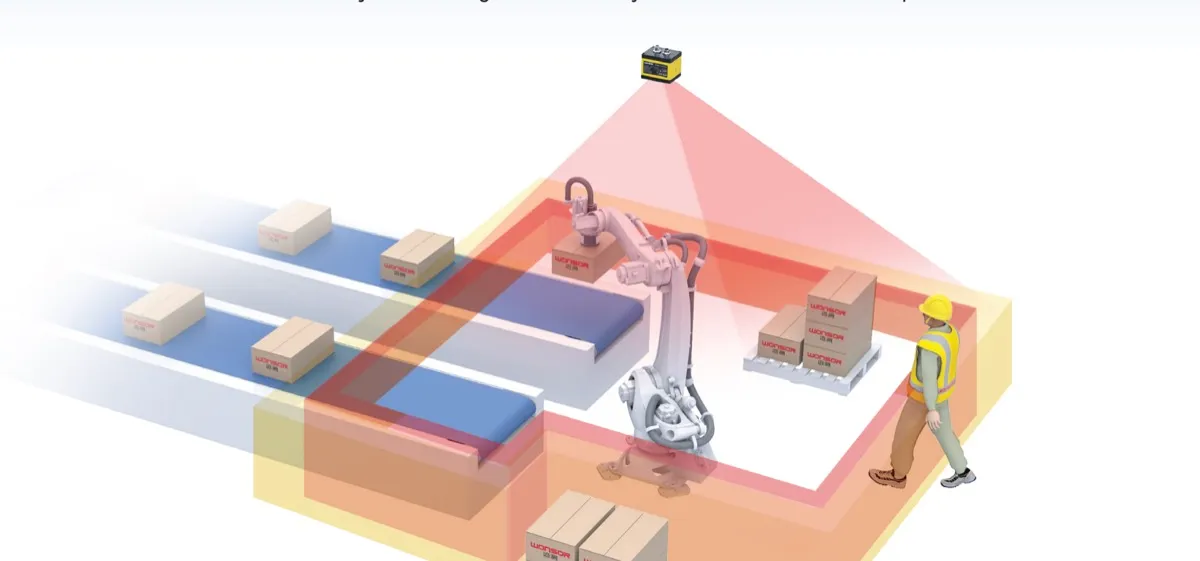
Why Is Human Detection Difficult in Industry?
Manufacturing facilities, warehouses, and logistics areas are complex environments where people, vehicles, and machines operate in the same space. Ensuring safety in these areas is not possible with physical barriers or simple sensors alone. People's positions, movement directions, and distances from machines constantly change.
2D detection systems are limited at this point. Shadows, perspective, occlusion, and variable lighting conditions can lead to false detections and safety risks.
Why 3D Detection?
3D human detection systems perceive not just a silhouette, but the person's actual position and volume in space. This enables distance measurement, collision risk analysis, and safe zone definitions to be performed with much greater precision.
Especially in areas with mobile robots, autonomous vehicles, and intensive human-machine interaction, 3D detection directly determines the reliability of the system.
From Safety to Data: A Next-Generation Approach
Today, human detection systems are no longer limited to a simple "stop / go" logic. The detected data produces valuable insights about pedestrian density, risk zones, waiting times, and operational bottlenecks.
This approach transforms safety from a cost item into a data-driven improvement tool.
Field-Ready Detection with INSPECT PEOPLE 3D
INSPECT PEOPLE 3D detects, tracks, and analyzes people in real time using 3D machine vision and AI-powered algorithms. The system aims to keep human-machine interaction within safe boundaries while ensuring operations continue without interruption.
False stops, unnecessary downtime, and detection errors are minimized. As a result, both workplace safety levels increase and production continuity is maintained.
Where Does the Real Value Emerge?
Successful human detection systems are those that adapt to the field and adjust themselves according to changing conditions. INSPECT PEOPLE 3D embraces this approach, addressing safety, efficiency, and operational continuity within the same framework.
Ultimately, human detection becomes not just a safety layer, but an integral part of industrial systems.