BLOG
Industry 5.0: What Awaits Us in Manufacturing in 2026?
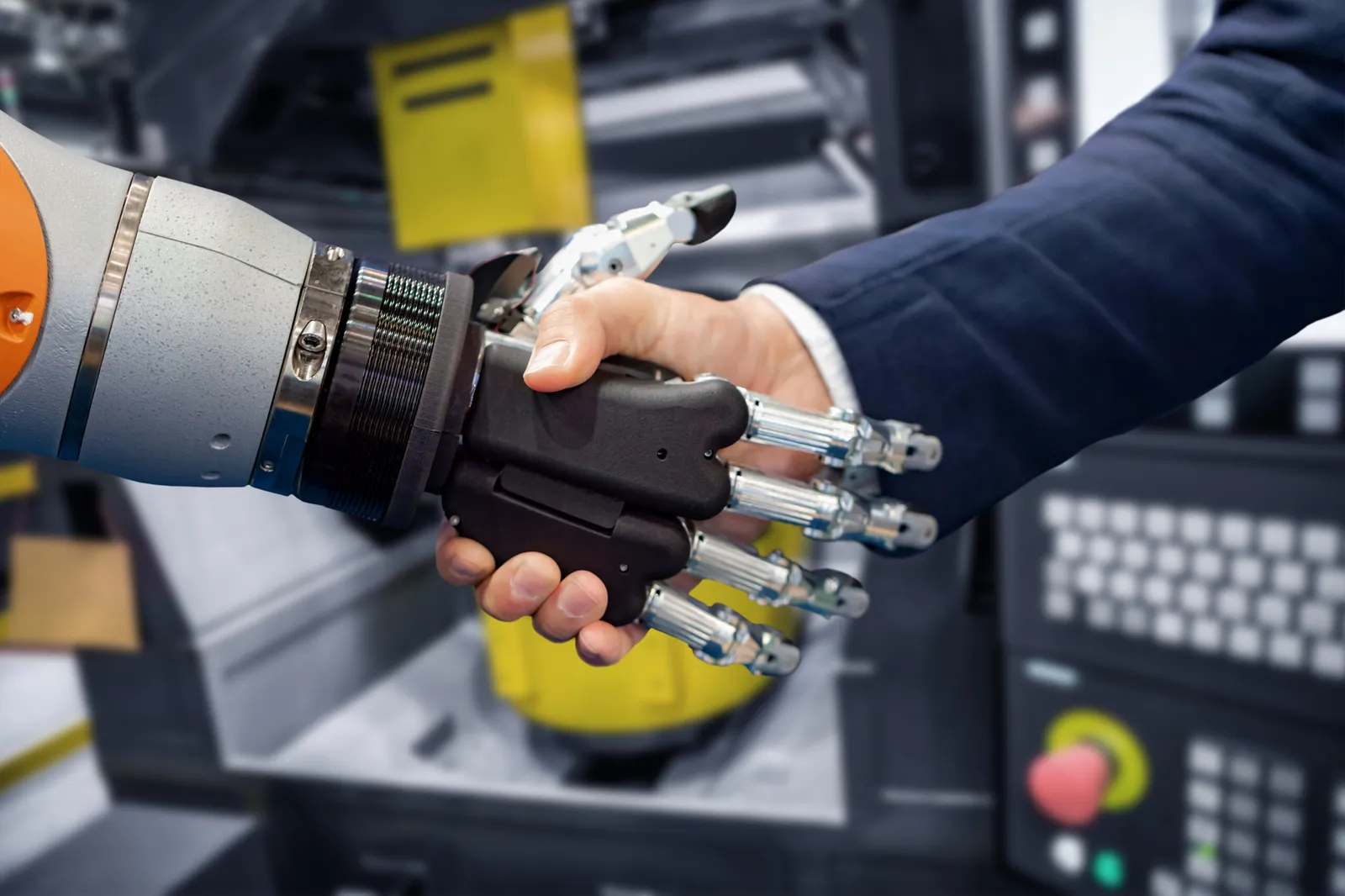
Industry 5.0 has been discussed in presentations and vision papers for a long time. As we approach 2026, the real question is: What will this concept actually mean on the factory floor, and what will change in production facilities?
Industry 5.0 Is Not a Technology, It Is an Approach
Industry 4.0 delivered a transformation built on automation, digitalization, and data collection. Industry 5.0, on the other hand, places people back at the center of these technologies.
The expected transformation in 2026 is not fully unmanned factories, but flexible, context-aware systems that work alongside humans.
This approach means a production model that strengthens the human decision-making role rather than having robots replace humans.
Human-Robot Collaboration Will Truly Become Widespread
Heading into 2026, cobots and robot systems with tactile perception will become more visible.
Robots will evolve from being machines that only perform repetitive tasks to assistants that can safely work in the same area as operators.
The prominent expectation at this point is:
More than the robot's speed, its precision, safety, and adaptability will be the determining factors.
Human-like grasping, force feedback, and controlled contact will become standard in sectors requiring precision assembly and fine manipulation.
There Is No Industry 5.0 Without Integration
For Industry 5.0 to reach the factory floor in 2026, systems operating independently will not be sufficient.
Robotics, image processing, IoT, and AI solutions must communicate within a single ecosystem.
Data will be not just a collected output, but an input that feeds real-time decisions.
Quality control systems will transform from structures that stop production to structures that guide production.
IoT infrastructures will provide not just monitoring, but forecasting and optimization.
Expectations in Turkey: Smart Steps, Not Giant Leaps
For Turkey specifically, the 2026 expectation is more toward step-by-step smart automation rather than radical and sudden transformation.
Companies are now demanding solutions that are:
- Measurable,
- Scalable,
- Open to human intervention,
rather than "full automation."
This approach reduces investment risk while enabling sustainable transformation in the long term.
Conclusion: Industry 5.0 Will Win on the Factory Floor
In 2026, the facilities that successfully implement Industry 5.0 will not be those with the most technology, but those that use technology in the right context.
Production models where humans, data, and robots come together in a balanced manner will make the competitive difference.
Industry 5.0 is not a future promise; it is a transformation that delivers real results when the right steps are taken.