BLOG
Robotic Bin Picking: 2D or 3D? Which One Is Really Needed for Your Application?
Why Is Bin Picking a Complex Application?
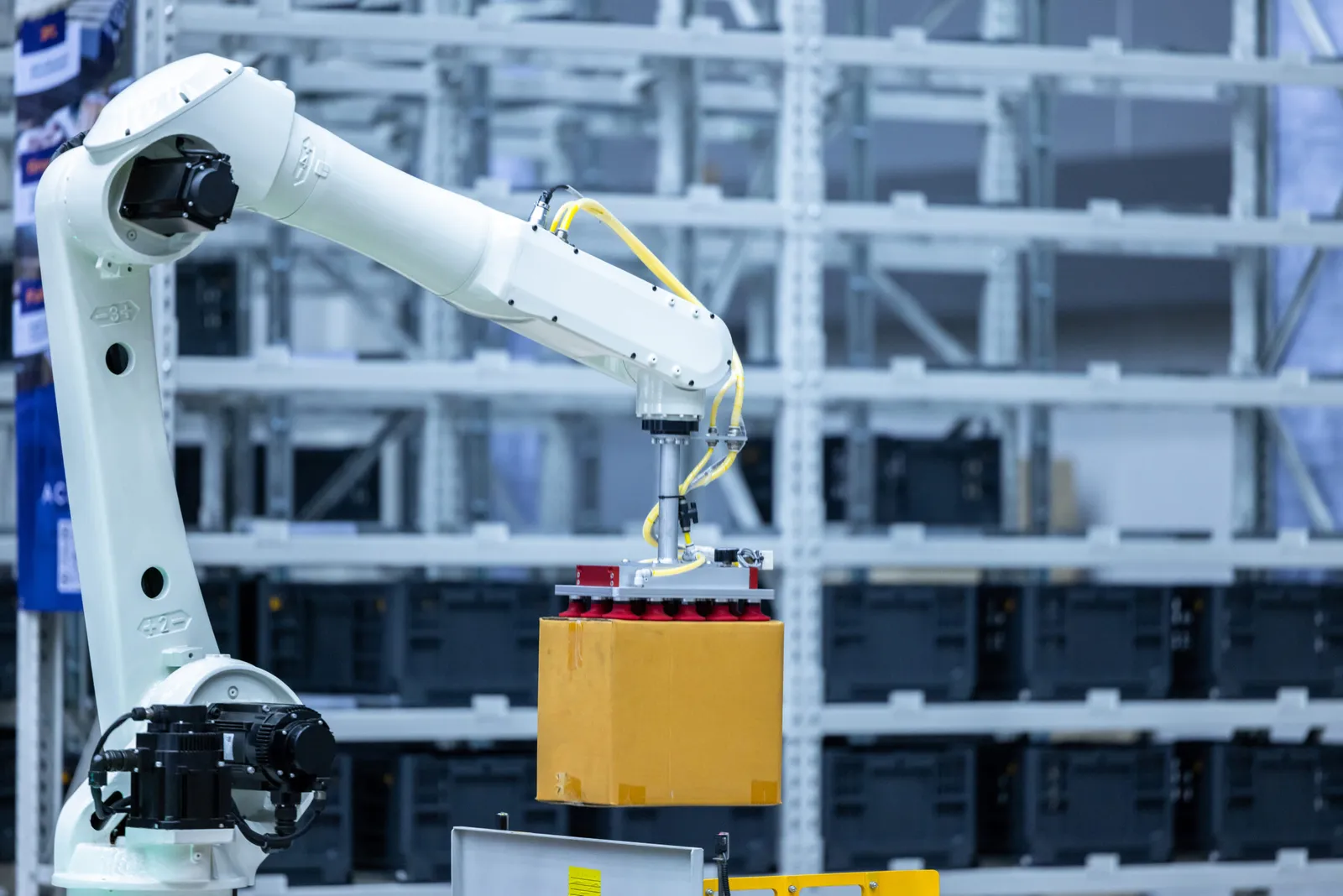
In industrial automation projects, bin picking applications are among the most complex robotic scenarios. Detecting randomly positioned parts, calculating the correct position, and reliably picking them with a robot is only possible with the right vision technology, not just the robot arm. The most frequently asked question at this point is: 2D or 3D?
When Is 2D Bin Picking Sufficient?
2D bin picking systems can be sufficient for applications where parts are on a specific plane and height differences are not critical. For parts with flat surfaces, clear orientation, and no overlap, 2D camera systems offer a fast and cost-effective solution. However, as part variety increases, stacking deepens, and orientation information becomes critical, 2D systems reach their limits.
When Does 3D Bin Picking Become Mandatory?
3D bin picking detects the actual position of parts in space through depth information. This enables reliable detection of overlapping parts, parts with complex geometries, or parts at different heights. Especially in sectors such as automotive, machinery manufacturing, and heavy industry, 3D vision has become a necessity rather than an option. However, using 3D in every application is not the right approach either; it can create unnecessary complexity and cost.
How Should the Right Technology Be Selected?
The correct decision is made by analyzing the real needs of the application. Factors such as part geometry, tolerance requirements, cycle time, and process stability should be evaluated together. In successful bin picking projects, technology selection is based on the actual production conditions on the field.
Application-Appropriate Bin Picking with MIS-PICK
MIS-PICK simplifies this decision process by offering both 2D and 3D machine vision options under a single system architecture. The goal is not to deploy the most advanced technology, but to commission the solution that works most efficiently in the field. This approach directly impacts the return on investment timeline for robot systems, particularly in production lines with high volumes and variable part structures. The wrong technology choice can reduce system stability while increasing maintenance and recommissioning costs. Therefore, bin picking projects should be approached not only as a technical decision but also as a strategic engineering decision. For long-term process reliability. Field suitability is the determining factor. Proper analysis is essential.