BLOG
Solomon 3D Image Processing Systems: A New Era for Smart Robots
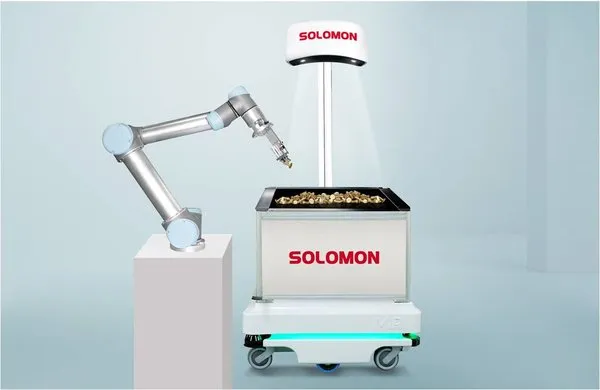
Innovations Brought by Solomon 3D Image Processing Technology
As robotic automation in industry becomes increasingly smarter and more efficient, 3D image processing systems play a critical role in this transformation. 3D imaging systems that enable robots to work more precisely, flexibly, and intelligently increase the efficiency of production processes and offer competitive advantages. Solomon 3D image processing systems, powered by advanced AI algorithms, enable much more precise and faster operations on production lines through their image processing technology.
Advantages of Solomon's 3D Image Processing Technology
The 3D image processing technologies offered by Solomon bring numerous advantages to production processes:
- High precision: Models objects in real-time 3D, enabling robots to perceive them more accurately.
- Advanced AI support: Optimizes object recognition, surface analysis, and defect detection processes through deep learning algorithms.
- Rapid adaptation: Can be easily integrated into different production environments and processes.
- Low error rate: Minimizes production errors by performing more accurate data analysis compared to traditional sensors.
- Flexible production processes: Adapts to variable production conditions, supporting robots to work effectively in dynamic environments.
Application Areas
Moving Object Detection
The rapid proliferation of robotic systems in the logistics and warehousing sector has increased the importance of moving object detection technology. Solomon 3D image processing systems minimize error rates by accurately determining the positions of products in handling and palletizing operations. These systems provide significant cost advantages to businesses by improving inventory management in warehousing processes.
Assembly and Welding Operations
Industrial assembly and welding operations are processes that require precision. Solomon's 3D imaging systems enable robots to precisely identify welding points, allowing error-free and high-quality welding operations. Additionally, they ensure continuous quality control on production lines by preventing incorrect part placement.
Automotive and Electronics Manufacturing
In the automotive and electronics sectors, assembly operations requiring micro-precision are common. Solomon's defect detection systems detect even the smallest defects during production, ensuring the maintenance of high quality standards. 3D imaging technologies make a significant difference in processes such as chip placement, circuit soldering, and precision component assembly.
Visual Quality Control and Defect Detection
Traditional quality control methods can be time-consuming and prone to human error. Solomon's advanced 3D imaging systems instantly detect surface defects, missing components, and manufacturing errors on products. This ensures the quality control process is carried out faster and more accurately.
Transformation in Production Processes with Solomon 3D Image Processing Systems
The AI-powered 3D vision systems offered by Solomon accelerate the transition to full automation systems by aligning factory production processes with the Industry 4.0 and Industry 5.0 vision. Through this advanced technology, businesses can reduce error rates, increase production capacity, and create more sustainable production processes.
Conclusion
Solomon's 3D image processing systems provide innovative solutions that make production lines smarter and more efficient. In numerous industrial areas including moving object detection, assembly, welding, and quality control, they enable robots to work more accurately, faster, and more efficiently. This allows businesses to achieve higher quality at lower costs and gain competitive advantage by investing in the future of their production processes.