BLOG
Gripper or Robot Hand? Choosing the Right End Effector for Pick and Place
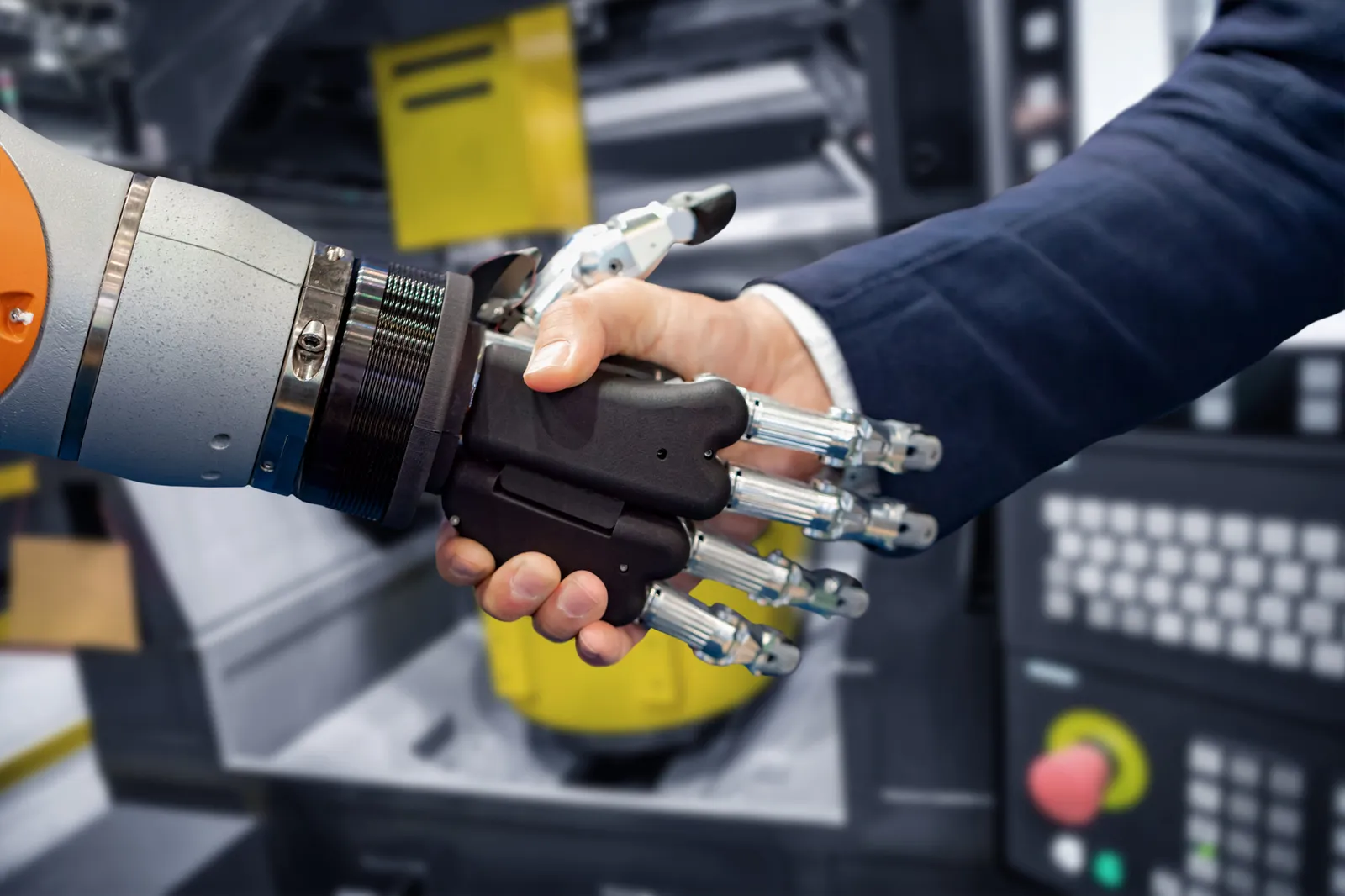
In robot projects the robot brand gets most of the attention, yet on the shop floor the outcome is often decided by the tool that touches the part. The robot reaches the right point; whether it can grasp the part without slipping, crushing or dropping it depends on the gripper. In this article we cover gripper types, when a robot hand is needed and the questions to ask when choosing an end effector for pick and place.
What Is a Gripper?
A gripper is the tool mounted at the end of a robot arm that grasps the part; it is also called an end effector. The robot performs the motion, but the gripper is the only component in contact with the part. That is why the part's weight, shape, surface and fragility determine the choice of gripper directly.
Gripper Types and Their Limits
| Type | How it works | Strong at | Limit |
|---|---|---|---|
| Vacuum | Holds the part with suction cups | Flat, closed surfaces such as cartons, sheet metal and glass; high speed | Grip weakens on porous, perforated, oily or strongly curved surfaces |
| Pneumatic parallel | Two or three jaws open and close with compressed air | Rigid, uniform parts; low cost, simple maintenance | Limited force and position control; each part family may need its own jaws |
| Electric (servo) | Motor-driven jaws with programmable position and force | Parts of different sizes, adjustable grip force | More expensive than pneumatic; size grows with payload |
| Magnetic | Holds with an electromagnet or permanent magnet | Sheet metal and steel parts | Works only on magnetic materials |
| Soft | Flexible fingers conform to the part's shape | Food, fruit and irregularly shaped products | Limited payload and positioning accuracy |
| Multi-finger robot hand | Jointed fingers with force control from tactile sensors | Highly varied and fragile parts; dexterous tasks such as turning and inserting | Unnecessarily complex and costly for simple, uniform tasks |
Six Questions for Choosing the Right Gripper
- How heavy is the part and where is its centre of gravity? The robot's payload includes the gripper's weight. A heavy gripper reduces the capacity left for the part.
- What is the surface like? Closed, flat surfaces suit vacuum; porous or oily surfaces suit mechanical gripping.
- Is the part fragile or deformable? A gripper that closes with fixed force can damage glass, food or thin plastic. Here grip force must be measured and adjusted.
- How many variants are there and how often do they change? For a single part type a simple gripper is most efficient. As variants grow, tool changers and jaw sets or a multi-purpose hand come into play.
- How does the part arrive? A simple gripper picks ordered parts. For parts lying randomly in a bin, the gripper must reach the grasp point found by the vision system without hitting neighbouring parts.
- What happens after the grasp? Is it just pick and place, or does the part need to be turned, inserted into a socket or have its barcode scanned?
When Is a Robot Hand Needed?
A multi-finger robot hand does not replace every gripper. In these cases, however, it makes a real difference:
- High product variety: one hand can grasp products of different shapes and stiffness without a tool change.
- Fragile products: tactile sensors detect the moment of contact and the applied force, and the hand adjusts its grip to the product.
- Tasks that need dexterity: turning a part, inserting a connector or rotating a package to scan its barcode is hard with parallel jaws.
- Stations designed for people: at workbenches, containers with handles or lab equipment made for human hands, a robot hand adapts more easily.
When Is a Robot Hand Unnecessary?
In a cell that picks one carton type all day and places it on a pallet, a vacuum gripper is both faster and cheaper. For loading rigid, uniform metal parts into a machine, a pneumatic or electric gripper is enough. A robot hand adds value where variety, fragility or dexterity is a real problem. If none of these is present, a simple gripper is the right choice.
MIS-TOUCH: A Tactile Robot Hand
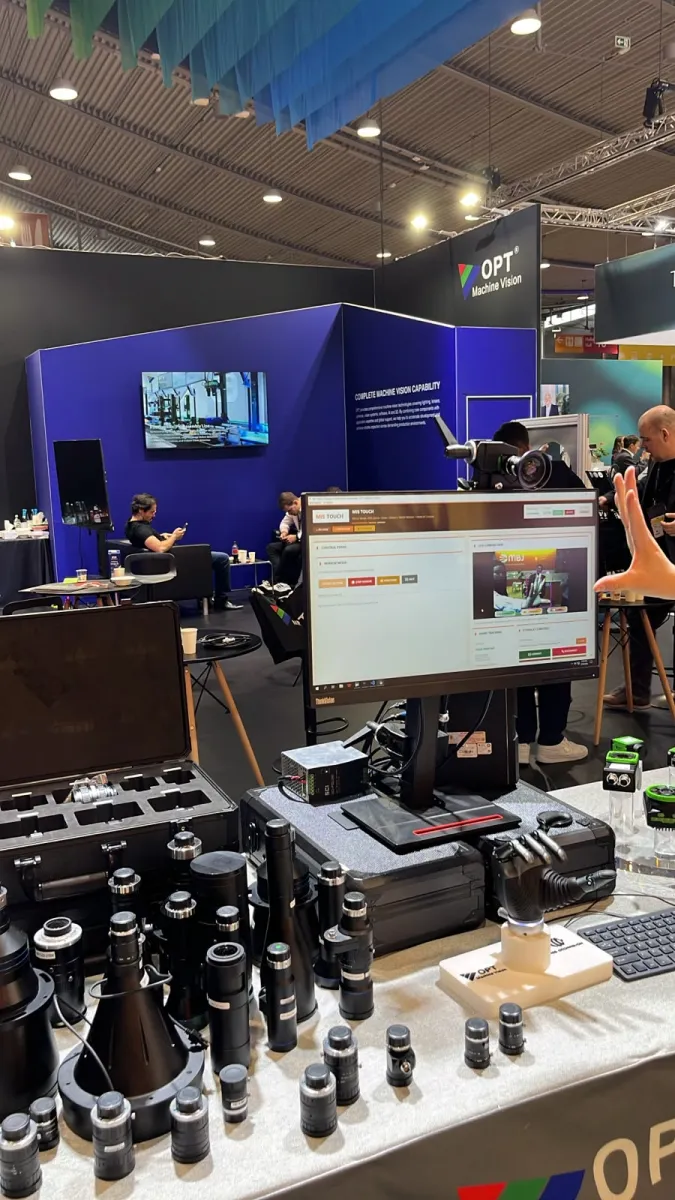
MIS-TOUCH is MIS Automation's tactile robot hand. It has a total of 508 pressure sensors in the fingers and palm, which it uses to sense the object's surface and the grip force. Hybrid force-position control and a soft-landing function let it grasp parts without crushing them.
MIS-TOUCH can be mounted on industrial robot arms such as FANUC, ABB, KUKA and Yaskawa, on cobots and on humanoid robots, and communicates over industrial protocols such as EtherCAT. Its main application areas are precision assembly, electronics, medical device manufacturing and laboratory automation.
Next Step
If you are not sure which gripper suits your part, let's discuss your application with a sample part. Start a project conversation.