BLOG
Where Should You Put the First Robot in a Factory?
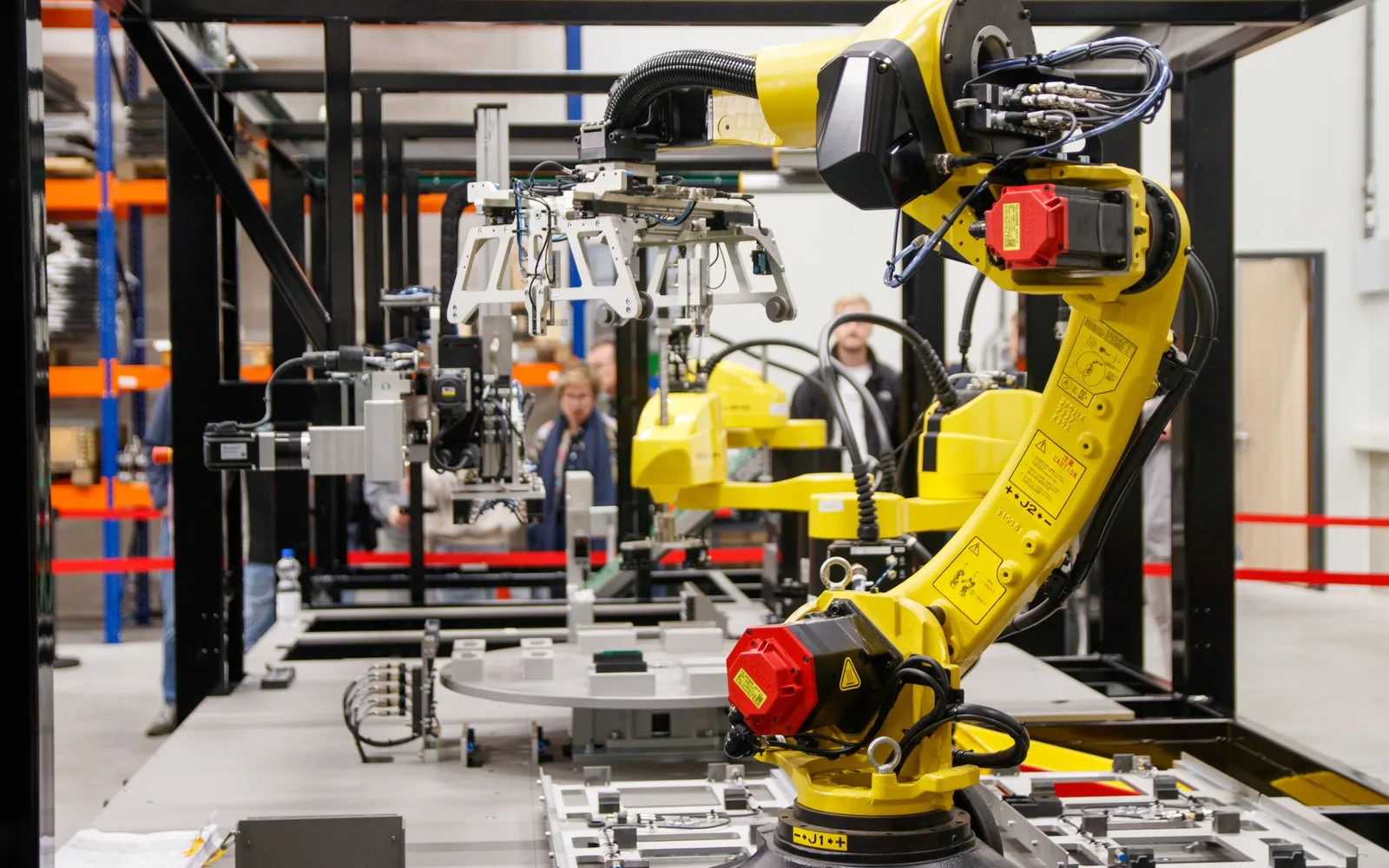
In a first robot investment the critical decision is not which brand of robot to buy, but which job to put the robot on. A badly chosen first application damages more than that one project: once a plant has said “we tried it and it did not work”, the second investment does not come up for years. This article explains how to pick the right job for a first robot, which applications suit a start, and where a robot should not go.
Five Traits of the Right Job for a First Robot
- It repeats. If the same motion runs all day, a robot does it well. Jobs that change with every part and require judgment are not a good first project.
- Part presentation is orderly. How the part reaches the robot is half the project. Parts arriving on pallets, trays or a conveyor are far easier than parts coming from a mixed bin.
- It has a measurable output. Parts per hour, scrap count, minutes of downtime. Where nothing is measured, the gain from the robot stays debatable.
- It is hard or risky for people. Heavy lifting, hot environment, sharp edges, repetitive strain. The gain here is not only speed but safety and staff turnover.
- If it stops, the plant does not. Putting the first project on the single critical point of the plant is unnecessary risk. For the learning phase, a visible but second tier job is the better choice.
Where Most Plants Start
| Application | Why it suits a first project | What to watch |
|---|---|---|
| Palletizing and depalletizing | Repetitive, heavy work with a known part layout | List pallet patterns and box variety up front |
| Machine tending | Clear gain if the operator waits at the machine | Fixture and grip repeatability must be solid |
| Packing and pick and place | Short cycle, measurable output | The gripper gets complex as product variety grows |
| Welding | High gain in quality consistency and safety | Part tolerance and clamping decide the result |
We covered these four in separate articles: robotic palletizing and depalletizing, machine tending in CNC and metalworking, welding robots and robotic welding systems.
Where Not to Put the First Robot
- On a station where the product changes constantly. A product family that changes weekly multiplies programming and gripper cost in a first project.
- On a job with no written quality criterion. A check described as “the operator looks and knows” cannot be automated before the criterion is defined.
- Where parts arrive completely unordered. Picking from a mixed bin is technically solvable, but it is a hard start for a first project. Before going there, read 3D bin picking technology and bin picking investment and return.
- On the plant’s only bottleneck. Stoppages during commissioning would hit all production.
- In a department nobody owns. If no one is named to run the robot daily and make small adjustments, the system is sidelined within months.
The Physical Side of the Layout
Once the application is chosen, the physical layout of the cell directly affects project cost. The headings most often skipped in the field:
- Space and access: plan forklift and pallet access as carefully as the robot working envelope.
- Safety: fence, door interlock, area scanner or human detection. If it will work alongside people, the risk assessment comes first; we looked at cobot applications from that angle.
- Feeding and discharge: how the part enters and leaves the cell often takes more engineering than the robot itself.
- Maintenance access: leave practical access for gripper changes, cleaning and fault clearing.
- Mobility: if the cell may move to another line later, the frame and supply are designed accordingly.
Is the Volume Enough?
A simple way to see whether a robot investment makes sense is to look at the total annual duration of the job. Multiply cycle time by annual part count; how many person hours does that equal? For a few hundred hours on a single shift a robot is usually expensive, while the same job across two or three shifts changes the picture quickly. The number of shifts is often more decisive than the part count.
Return: Visible and Invisible Gains
Visible gains are easy to calculate: person hours saved and added output. The invisible gains are often larger:
- Consistent quality and less scrap
- Lower accident risk
- Less pressure from hiring and retention on hard jobs
- Growing capacity without adding headcount
The real cost of the investment is more than the hardware price: gripper, fixture, safety, feeding mechanics, software and commissioning together can exceed the hardware item. We broke that down in our article on integration cost in robotic automation.
Before You Buy: PoC and a Written Acceptance Criterion
A first robot project should start with a feasibility test on your own parts. Two things to ask for: a trial with real parts, and a written acceptance criterion. The criterion should not be “it works” but numbers: target cycle time, success rate, and which part variants are in scope. Other headings to compare in quotations are collected in how to choose an automation company.
Six Common Mistakes in a First Robot Investment
- Choosing the hardest job and testing the robot in an impossible exam
- Ordering the robot before planning part feeding
- Leaving gripper and fixture out of the budget
- Not naming an owner for maintenance and daily operation
- Reducing operator training to a one off presentation
- Not putting the acceptance criterion in the contract
How MIS Otomasyon Works
In first robot projects we choose the application first, then the robot and camera that suit it; we are not tied to a single brand. Explore our picking and placing solutions on the MIS-PICK page, or request a demo for a feasibility check on your own part and line.