BLOG
Smart Warehouse Systems: Picking, Gripping and Inspection in Warehouse Automation
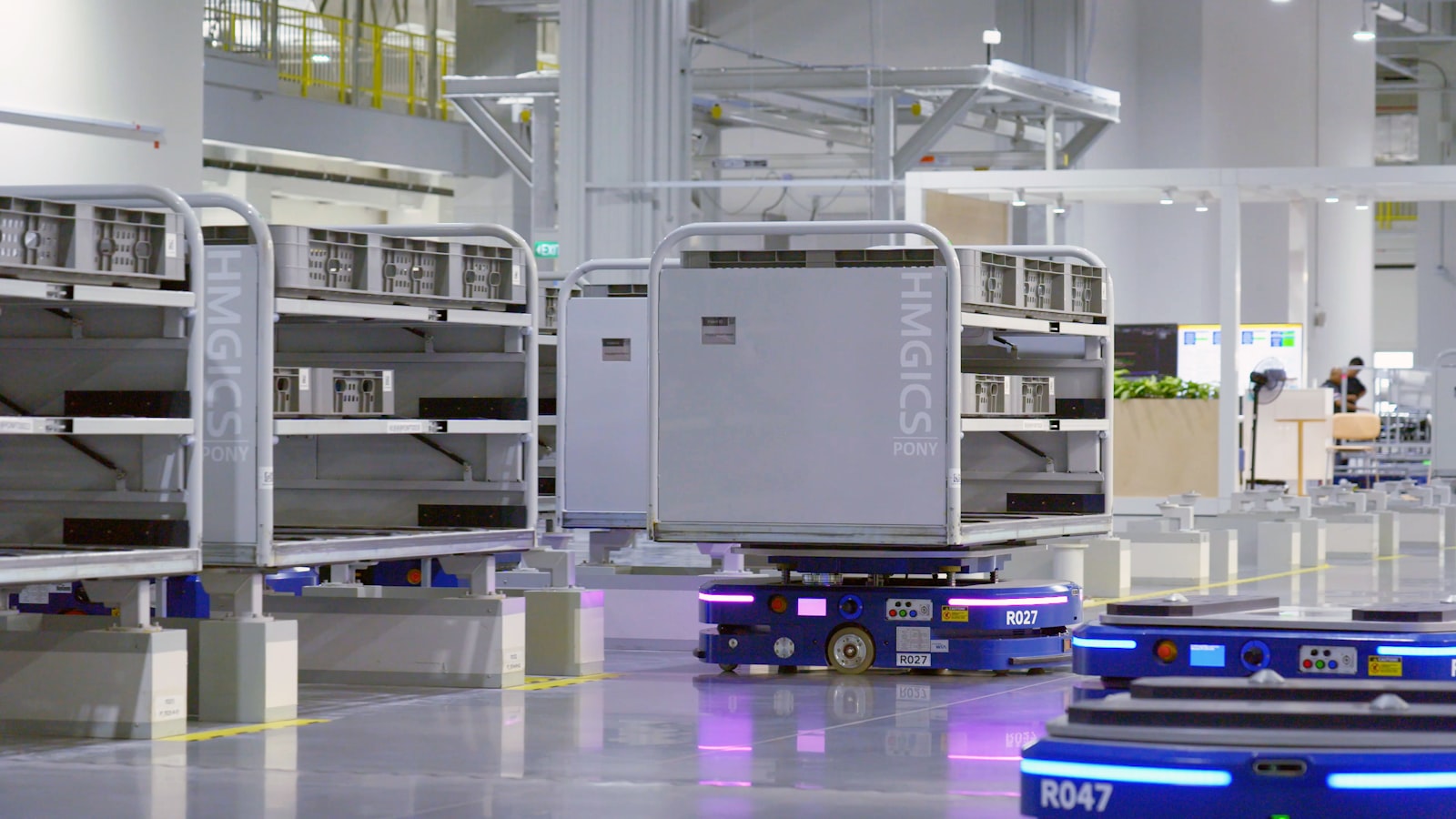
Smart warehouses usually bring to mind shuttles running between high racks or mobile robots moving through the aisles. That is the visible side of warehouse automation. In many warehouses, however, it is still a human hand that takes the product out of the tote, puts it in a carton, checks its label and stacks it on a pallet. In this article we explain the layers of warehouse automation systems, the steps where automation is hardest and how robotic picking and visual inspection address them.
What Layers Make Up a Smart Warehouse System?
| Layer | Example systems | What it automates |
|---|---|---|
| Storage | Automated storage and retrieval systems (AS/RS), shuttle racks, vertical lift modules | Putting products into and taking them out of storage |
| Transport | Conveyors, sorters, autonomous mobile robots (AMR) | Moving products from one point in the warehouse to another |
| Management | Warehouse management system (WMS), warehouse control system (WCS) | Stock, order and task planning |
| Picking and handling | Robotic picking, palletizing and depalletizing cells | Grasping products and placing them in cartons or on pallets |
| Inspection | Barcode reading, visual inspection, weight checks | Shipping the right product, in the right quantity, undamaged |
The first three layers are mature technologies and widely used in large warehouses. The last two get harder as product variety grows, and in most warehouses this is where the human hand remains.
Why Is Picking the Hardest Step?
Racking and transport systems do not need to recognise the product; they move a tote or pallet from one point to another. In picking, the system has to see the product inside the tote, decide where to hold it and grasp it without damage. In a warehouse with many different products, each one has a different size, weight and packaging. Shiny stretch film, transparent bags and soft packaging are challenging for both the vision system and the gripper.
Where Robotic Picking Works in the Warehouse
3D vision and AI allow a robot to recognise randomly placed products and pick them one by one. The most mature warehouse applications are:
- Mixed carton handling: picking cartons of different sizes from a conveyor or pallet and routing them.
- Pallet loading and unloading: depalletizing at goods receipt, palletizing at dispatch. We cover this in robotic palletizing and depalletizing.
- Order preparation: taking products from a tote and placing them in an order tote or carton.
Which application to automate first depends on the order profile. Low-variety, high-volume products suit palletizing and carton handling; high-variety orders with small items suit vision-guided picking.
Gripping: Fragile and Varying Products
Even when the vision system finds the product, holding it is a separate problem. Vacuum grippers are fast on cartons and flat surfaces but can fall short with bags, bottles or fragile products. For these, grippers with adjustable force or robot hands with tactile sensing come in. We compare the options in our gripper vs. robot hand comparison.
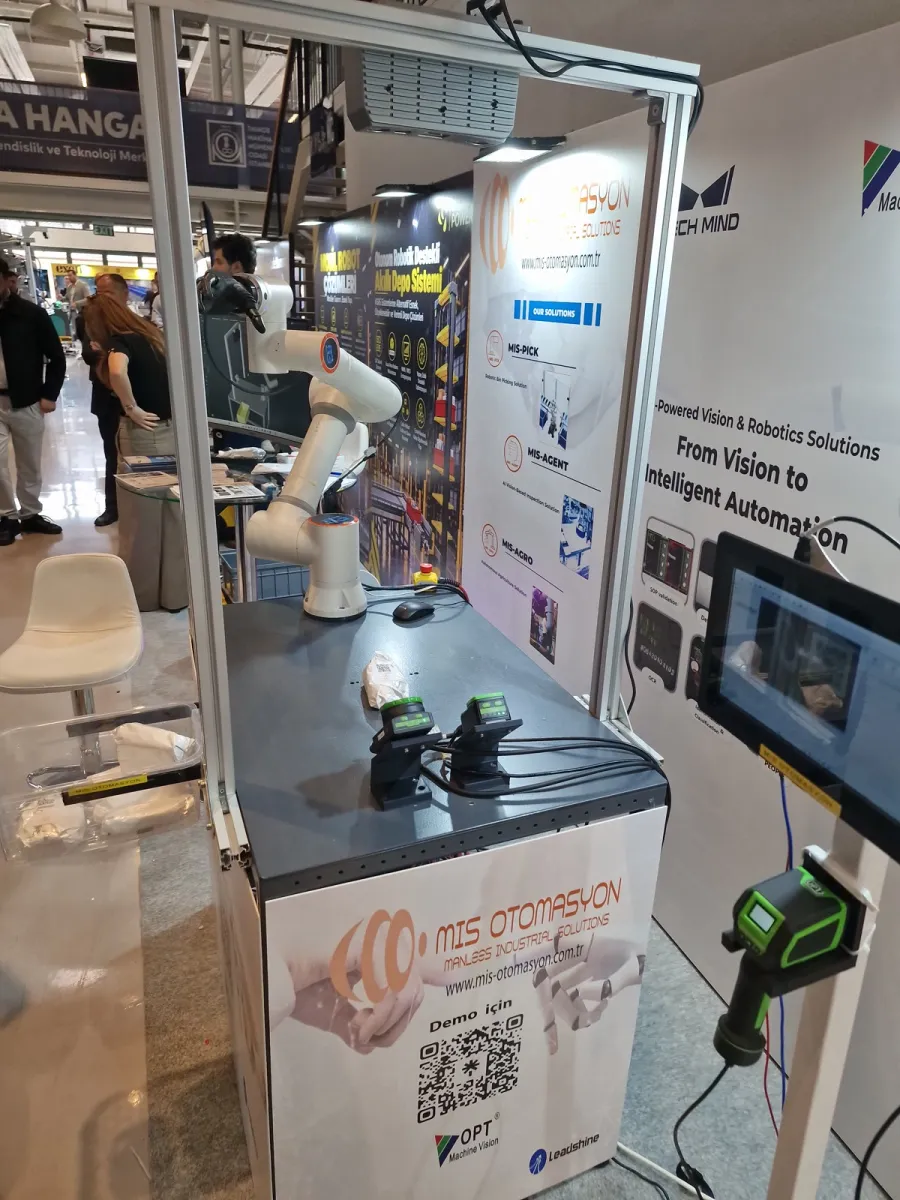
At the Intralogistics and Warehouse Automation Solutions summit at Makina Hangar we showed MIS-TOUCH in exactly this scenario: the hand picks the package up from the table, turns it without crushing it and scans its barcode.
Inspection: Wrong Product, Damaged Packaging, Faulty Label
A wrong order leaving the warehouse comes back as a return and a lost customer. Barcode reading confirms that the right product was picked, but it does not show whether the packaging is damaged or the label is legible. Camera-based visual inspection fills that gap: packaging integrity and label verification can be checked at the same station.
Where to Start with Warehouse Automation
- Map your order profile. How many different products are there, how many order lines go out per day, how many orders contain a single item? These figures decide which automation fits.
- Find the bottleneck. Goods receipt, picking, packing or dispatch: which step piles up work by the end of the shift?
- List the steps still done by hand. Even with automated transport, manual picking and inspection limit capacity.
- Start with a pilot. A pilot at one station, with real products and a measurable target, reduces risk before investing across the warehouse.
We explain how autonomous mobile robots are used for transport in our AMR article.
MIS Automation and Logistics
After our meetings with logistics industry representatives at the Makina Hangar summit, we started customising our products for the logistics sector. We have three products for the picking, gripping and inspection steps in the warehouse:
- MIS-PICK: mixed carton handling, pallet loading and unloading and order preparation with 3D vision and AI.
- MIS-TOUCH: a tactile robot hand with 508 pressure sensors for fragile and varying products.
- MIS-INSPECT: AI-based visual inspection for packaging integrity and label verification.
Next Step
If you are a logistics company, 3PL operator or distribution centre, let's assess your picking and inspection steps together. Start a project conversation.